
Educational Administration Training, TQM, EI, Diversity, Custodial & Maintenance
This is where the Nigerian Institute of Production Management (NIPM) Educational Administration Training Centre (EATC) brings unmatched capability.
Educational Administration Training, TQM, EI, Diversity, Custodial & Maintenance
World-class educational institutions — universities, polytechnics, colleges and high schools — depend on the synchronized performance of both teaching and non-teaching staff to deliver excellence.
The nature of school operations is multi-layered: teachers drive pedagogy, curriculum delivery and learner development, while non-teaching personnel in maintenance, custodial, janitorial, administrative and support roles create and sustain the physical, technical and emotional environments in which learning thrives.
The importance of this synergy cannot be overstated: when classrooms are safe, hygienic, well-lit, and equipment is functional; when administrative systems are responsive; and when teachers apply 21st century pedagogy, students experience the right learning environments that foster cognitive, social and emotional growth.
Yet institutions face persistent challenges. Rapid technological change, Industry 4.0 and AI integration, multicultural student populations, rising stakeholder expectations, budget constraints, aging infrastructure, and skills gaps among staff all impact performance.
Teachers struggle with workload, learner diversity, and the shift from rote learning to critical thinking and creativity. Non-teaching staff need structured training in Total Productive Maintenance (TPM), Total Quality Management (TQM), emotional intelligence, hospitality standards, and modern hygiene protocols.
The result: sub-optimal asset uptime, safety risks, poor customer service experience for students/parents, and weakened institutional reputation.
The Purpose of Education and Global Standards
UNESCO defines education as a fundamental human right and a public good essential for peace, sustainable development and intercultural dialogue. Its Education 2030 Agenda emphasizes inclusive, equitable quality education and lifelong learning, anchored on four pillars: learning to know, learning to do, learning to be, and learning to live together.
The British Council’s Core Skills framework identifies critical thinking, problem solving, collaboration, communication, creativity, citizenship, digital literacy and student leadership as essential 21st century competencies that teachers must intentionally develop in learners.
The U.S. Department of Education emphasizes equity, evidence-based pedagogy, safe and supportive schools, and educator excellence as pillars of world-class systems.
Across these agencies, global standards converge on one point: quality education requires quality people and quality environments — delivered by competent, motivated, well-trained teaching and non-teaching staff.
Child education sits at the heart of this mandate.
Pedagogy must evolve beyond content delivery to creating the right learning experiences in the best environments — spaces that are physically safe, psychologically supportive, culturally inclusive, and operationally excellent.
This is only possible when every staff member, from the Vice Chancellor or School Administrator, the maintenance, secretarial, clerical staff to the janitor, understands their role in the value chain of learning.
Strategies for Optimizing Performance: The NIPM EATC Capability
Optimizing performance demands integrated capacity building that links TQM, Emotional Intelligence (EI), technical maintenance, diversity and inclusive leadership, and hospitality-focused support services. This is where the Nigerian Institute of Production Management (NIPM) Educational Administration Training Centre (EATC) brings unmatched capability.
As the pioneer and foremost provider of world-class production, manufacturing, logistics, supply chain and operations management education in Nigeria and Africa, NIPM EATC applies proven industrial excellence models to educational institutions. Educational institutions engage in production and operations. They produce a wide array of tangible and intangible outcomes that impact individuals, organizations and the Society. Their products are human resources (educated individuals) as well as new knowledge borne out of research and social integration. This drives personal and talent development, creativity and innovation, societal and community development and economic growth.
Nigerian Institute of Production Management (NIPM) Educational Administration Training Centre (EATC) is collaborating with The Certified Institute of Applied Management And Administration (CIAMA) to deliver high-value programmes for the education sector.
CIAMA provides professional membership programmes for Educational Administrators and Managers, while NIPM EATC brings global best practices in Total Quality Management, Emotional Intelligence, Maintenance, Custodial Services, Diversity, and Administrative Excellence.
Nigerian Institute of Production Management (NIPM) Educational Administration Training Centre (EATC) has successfully partnered such globally recognized institutions as the American International School of Lagos (AISL), Victoria Island, Lagos, Nigeria.
A number of reputable educational institutions such as College of Production & Operations Management (COPOM), Certified Management And Administration Institute (CMAI), Copom Industrial Training & Educational Services (CITES) and Brit Academy are affiliates of Nigerian Institute of Production Management (NIPM).
NIPM EATC effectively handles training and professional development of teaching and non-teaching staff through the following, among others:
■ TPM Principles and Maintenance Strategies for Maintenance Personnel: Embedding autonomous and planned maintenance, equipment reliability, and safety compliance to ensure zero-breakdown learning environments.
■ Core Educational Management Skills for Teachers and School Administrators: Emotional Intelligence (EI), personal effectiveness, communication skills, developing critical thinking, innovation, creativity and problem-solving skills aligned to British Council’s Core Skills, USA, Canadian, German and other National Educational Authorities, Ministries, Agencies and Councils, and UNESCO’s learning outcomes.
■ Hospitality-Focused Custodial, Janitorial, Hygiene and Sanitation Practices: Elevating support services to global standards of cleanliness, infection control, and customer experience in line with US Department of Education safe schools benchmarks.
■ Leadership Development, Team Building, Conflict Resolution and Collaboration Skills: Building cohesive, high-trust school cultures where academic and non-academic staff work as one team.
■ Working Smarter and Better for Excellence in Multicultural Environments: Equipping staff to thrive in diverse, tech-enabled, Industry 4.0 schools using digital tools, data, and AI-assisted systems for decision making and continuous improvement.
With NIPM qualifications, school personnel work better and smarter with superior expertise and excel in workplace performance. NIPM helps institutions achieve accelerated staff advancement while driving superior and sustainable value for the present and future generation of learners, educators, and communities.

GENERAL PROGRAM TITLE:
TQM, EI, Diversity, Custodial, Maintenance & Educational Administration Training
Optimizing Performance of Teaching and Non-Teaching Staff for World-Class Educational Excellence
OVERALL AIM:
To equip teaching and non-teaching staff of universities, polytechnics, colleges and high schools with TQM principles, emotional intelligence, diversity and leadership, technical maintenance strategies, and hospitality-focused support skills needed to create safe, efficient, learner-centered environments aligned to UNESCO, British Council, and global education standards.
COURSE STRUCTURE BY STAFF CATEGORY
TRACK A: TEACHERS & SCHOOL ADMINISTRATORS
Target Groups:
Vice Chancellors, Rectors, Provosts, Principals, Deans, Administrators, HODs, Teachers, Education Officers, Quality Assurance Officers
Course Objectives:
- Integrate TQM and EI into classroom management and school leadership.
- Develop 21st century core skills for pedagogy: critical thinking, creativity, problem-solving, collaboration.
- Strengthen personal effectiveness, communication, and conflict resolution in multicultural school environments.
- Align teaching/leadership practices with UNESCO Education 2030, British Council Core Skills, and US Department of Education benchmarks.
Modules:
– Module A1: TQM in Education Customer focus, continuous improvement, PDCA in schools, quality learning outcomes
– Module A2: Emotional Intelligence for Educators – Self-awareness, empathy, managing learner emotions, teacher wellbeing
– Module A3: 21st Century Pedagogy & Core Skills – Critical thinking, innovation, creativity, digital literacy in lesson design
– Module A4: Personal Effectiveness & Communication – Public speaking, parent engagement, feedback, report writing
– Module A5: Leadership, Team Building & Conflict Resolution – Leading departments, managing change, building high-trust teams
– Module A6: Working Smarter in Industry 4.0 Schools – EdTech, AI tools for assessment, data-driven decision making
Learning Outcomes: Participants will be able to apply TQM tools to improve teaching quality, demonstrate EI competencies, design 21st century lessons, lead teams, and leverage digital tools for pedagogy and admin efficiency.
TRACK B: MAINTENANCE PERSONNEL
Target Groups: Directors of Works, Engineers, Technicians, Maintenance Officers, Workshop Attendants, Estate Officers

Course Objectives:
- Apply TPM and preventive maintenance to school infrastructure and equipment.
- Eliminate breakdowns in labs, workshops, hostels, classrooms, and utilities.
- Ensure safety compliance and energy efficiency in line with global school standards.
- Build maintenance culture that supports uninterrupted learning.
Modules:
– Module B1: Introduction to TPM in Schools – 8 Pillars of TPM adapted for education
– Module B2: Autonomous & Planned Maintenance – Checklists, SOPs, lubrications, inspections for school assets
– Module B3: Safety, Compliance & Risk Management – OSHA, fire safety, electrical safety, accident prevention
– Module B4: Utilities & Facilities Management – Water, power, HVAC, plumbing, waste systems optimization
– Module B5: 5S, Kaizen & Visual Management – Workplace organization for workshops, stores, and labs
– Module B6: Digital Maintenance & Industry 4.0 – CMMS, IoT sensors, predictive maintenance for school assets
Learning Outcomes: Participants will implement TPM for zero breakdowns, conduct safety audits, cut costs through planned work, use 5S, and apply digital tools for asset monitoring.
TRACK C: CUSTODIAL, JANITORIAL & HOSPITALITY SERVICES
Target Groups: Sanitation Officers, Cleaners, Janitors, Porters, Housekeepers, Hostel Managers, Kitchen/Hospitality Staff

Course Objectives:
- Upgrade custodial/janitorial services to hospitality-focused global standards.
- Ensure hygiene, sanitation and infection control for safe learning environments.
- Develop customer service, EI and teamwork skills for front-line support staff.
- Create clean, welcoming, dignified spaces that support child education and wellbeing.
Modules:
– Module C1: TQM & Service Excellence in School Support – Internal customer concept, quality service delivery
– Module C2: Modern Cleaning Science & Hygiene Protocols – Chemicals, tools, colour-coding, high-touch disinfection
– Module C3: Hospitality-Focused Custodial Practices – Dignity, discretion, presentation, guest/parent experience
– Module C4: Health, Safety & Infection Control – WHO/CDC school hygiene standards, PPE use, waste segregation
– Module C5: Emotional Intelligence & Communication – Respectful interaction with children, staff, visitors
– Module C6: Teamwork, Conflict Resolution & Time Management – Working in shifts, handling complaints, smarter routines
Learning Outcomes: Participants will execute cleaning to WHO/US standards, deliver hospitality-grade service, prevent infections, communicate with empathy, and maintain 24/7 cleanliness efficiently.
TRACK D: CROSS-CUTTING ALLIED SKILLS (ALL STAFF)
Target Groups: All teaching and non-teaching staff
Course Objectives:
- Build shared culture of excellence, collaboration and continuous improvement.
- Develop EI, ethics, and communication for multicultural school communities.
- Equip all staff to contribute to child education and safe learning experiences.
Modules:
– Module D1: Working Smarter & Better in Schools – Productivity, time management, digital literacy basics
– Module D2: Emotional Intelligence for School Communities – Self-regulation, empathy, social skills at work
– Module D3: Collaboration in Multicultural Environments – Respect, inclusion, inter-department synergy
– Module D4: Conflict Resolution & Ethical Conduct – Code of conduct, safeguarding, grievance handling
– Module D5: Industry 4.0 & AI Awareness for Schools – How tech changes roles; staying relevant
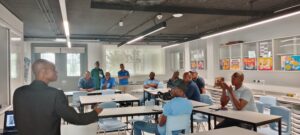
Learning Outcomes:
All participants will demonstrate EI and ethics, collaborate across boundaries, use basic digital tools, and contribute to a safe, inclusive, high-performance school culture.
TRACK E: ADMIN, REGISTRY & PROFESSIONAL SUPPORT STAFF
Target Groups:
Assistant Registrars, Librarians, Administrative Officers, Secretaries/PAs, Registry Staff, Bursary/Accounts Officers
Course Objectives:
- Build Stress Management & Personal Effectiveness skills for high-pressure school environments.
- Apply Effective Performance Management tools for appraisals, KPIs, and service delivery.
- Strengthen executive support, records management, and office administration with TQM & EI principles.
- Promote Diversity & Inclusive Leadership across departments for equitable learner-centered services.
Modules:
– Module E1: Stress Management & Personal Effectiveness – Triggers, resilience, time/energy management, work-life balance in schools
– Module E2: Effective Performance Management – Setting SMART goals, KPIs for admin units, feedback, appraisal documentation
– Module E3: Executive Admin Excellence – Minute writing, records/digital filing, scheduling, confidentiality, front-desk hospitality
– Module E4: Diversity & Inclusive Leadership – Unconscious bias, inclusive communication, gender equity, disability support, multicultural teamwork
Learning Outcomes: Participants will manage stress during peak cycles, use performance tools to improve accountability, deliver TQM-aligned admin support, and foster inclusive practices.
Delivery Methodology
Case studies, role plays, school facility walk-throughs, SOP simulations, group projects, video demonstrations, NIPM toolkits, pre/post assessments.
Duration Options
– Full Programme: 5 Days | All Tracks
– Modular: 2 Days per Track | Customized for staff category
– Executive Briefing: 1 Day | For School Leaders
Certification & Membership
Joint NIPM–CIAMA Professional Certificate in – TQM, EI, Diversity & Core Schools Support Services_ issued per track completed.
Participants are eligible for CIAMA professional membership grades for Educational Administrators and Managers including Fellow, Doctoral Fellow, Full Member and Associate Member – FCIAM, Doc. FCIAM, MCIAM, ACIAM.
CONTACT US
The Educational Administration Training Centre (EATC),
Nigerian Institute of Production Management (NIPM)
Tel./WhatsApp: 08069006671, 08023140750
E-mail: info@nipmnigeria.com.ng
Organized by NIPM EATC in collaboration with The Certified Institute of Applied Management And Administration (CIAMA)
Global Ring of 8 Core Competencies: TQM, EI, Maintenance, Custodial, Leadership, Innovation, Admin Excellence, Inclusive Practice
What type of education does NIPM Offers?
NIPM offers career – centred education and training.
In 1987 Dr. Olaniyi Opanuga as the National Secretary and Director of education, training and
consultancy of Nigerian Institute of Production Management (NIPM) introduced multi – modal
approaches including guided andragogy, inspired hentagogy, practice – based, experiential,
problem – solving and focused learning which revolve around building knowledge, skills and
behavioural competencies to further personal, professional and entrepreneurship
development.
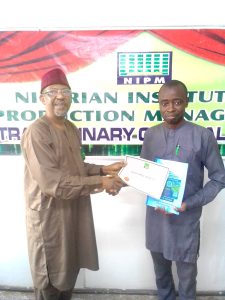
Dr. Opanuga believes in career – centred learning, practice – based education including
curriculum design, learning methodologies and deliver modalities that foster the learner job,
professional career and entrepreneurial readiness.
Contact Us
Tel/WhatsApp Message; 08023140750, 09023194157, 08069006671.
Email: info@nipmnigeria.com.ng
Leave a Reply